
The Reserve Bank of India (RBI) raised the minimum capital requirement for so-called shadow banks and tightened rules on deposits and bad loans to avoid any potential risk to the economy from these rapidly growing finance firms by regulating them like traditional banks.

Foreign investors have bought around $2.4 billion in both debt and equity so far in October, pushing the total inflows to nearly $36 billion so far in the year.

The partially convertible rupee closed at 61.45/46 per dollar, weaker from Wednesday's 61.35/36.

In the offshore non-deliverable forwards, the one-month contract was at 61.56/66, while the three-month contract was at 62.16/26.

The RBI's warnings signal its concern that unhedged firms could be a vulnerable link should global markets buckle.

Cleaning up India's grubby business climate is top of the agenda for both regulators and the government.

The big test will come at the end of March when the fiscal year ends and banks tend to hold on to cash.

The rupee appreciated by three paise to close at one-week high of 60.81 against the US dollar in the previous session on sustained dollar selling by exporters and capital inflows.

Rajan also said the RBI had reduced the current account deficit "substantially".

India's macroeconomic indicators are improving and inflation has been coming down consistent with the central bank's forecast, but Asia's third-largest economy needs investment growth to pick up, he added.

The rupee bounced back by 26 paise to end at 59.93 against the American currency on Friday as exporters and some banks sold dollars.

The rupee had revisited the near 2-month low of 60.55 per dollar earlier in the session.
The rupee had closed at 60.1550/1650 per dollar on Monday.

The drive against insider trading comes after SEBI last year received enhanced investigation powers from parliament, including the ability to monitor call records.
Increased selling of the dollar by banks and exporters amid sustained foreign capital inflows supported the rupee.

The bank adds it expects Modi to fight inflation through administrative measure

A higher opening in the domestic equity market also supported the rupee but dollar's gain against other currencies overseas limited the rise of domestic unit, forex dealers said.
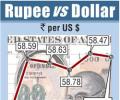
The rupee had retreated four paise from its 11-month high levels to close at 58.63 against the dollar on Tuesday on fresh demand for the US currency from importers, amid some profit- booking in stocks.

He said the total capital requirement for state-run banks is Rs 455 billion ($7.6 billion) in 2014/15 fiscal year, much lower than the Rs 113 billion provided for recapitalisation in the interim budget in February.
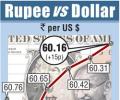
The currency got support from dollar flows into local equities and greenback sales from state-run lenders.
 © 2026 Rediff.com - Advertise with us - Disclaimer - Privacy Policy - Sitemap - Feedback - About us - Terms of use - Grievances